Last Updated: 4 November 2026
Quick Summary
Good bathroom cleaning comes down to a short, fixed daily routine: clean the toilet bowl, rinse and store the brush straight after use, and keep clutter cleared. Pair this with a weekly and monthly schedule, matched cleaners for each surface, and good ventilation to prevent damp and mould.
- Clean the toilet bowl at the same time each day, taking about two minutes.
- Rinse the brush head after every use and store it in its holder, not on the floor.
- Run the extractor fan during and for 10 minutes after every shower.
- Take unwanted medicines to a pharmacy for safe disposal rather than flushing them.
- Use a dedicated mould remover for grout and ventilate the room well when using it.
Table of Contents
- Why a Tidy Bathroom Starts With a Clear Routine
- Decluttering and Sorting What Lives in Your Bathroom
- Storage Ideas for Small and Awkward Bathroom Spaces
- A Weekly and Monthly Bathroom Cleaning Schedule
- How to Clean a Toilet Brush Properly After Every Use
- How to Keep a Toilet Brush Hygienic Between Cleans
- Choosing a Toilet Brush With Soap Dispenser for Daily Use
- Frequently Asked Questions
Most bathrooms look tidy until you open the cupboard under the sink or glance at the toilet, and that is when good bathroom cleaning habits really start to matter. Clutter builds up fast, and a dirty toilet brush sitting in a damp corner can undo an hour of cleaning in seconds. At Moostar, we make a soap-dispensing toilet brush built around a replaceable silicone head, and we think a clear daily routine does more for hygiene than any single product. This guide walks through the habits that keep a toilet clean and the bathroom easy to manage.
Why a Tidy Bathroom Starts With a Clear Routine
A tidy bathroom is not about buying more storage. It is about knowing where things go and when they get cleaned.
A simple routine changes that. Set a fixed time for a quick toilet clean, such as every morning or after the evening bath. Keep your brush in its holder, not on the floor, so it stays off surfaces you touch.
- Clean the bowl at the same time each day
- Rinse and store the brush straight after use
- Wipe the seat and lid once a week
- Check your supplies before they run out
Decluttering and Sorting What Lives in Your Bathroom
Start by emptying everything out. Put it on the bed or a towel so you can see the full amount. Most bathrooms hold far more half-used bottles and old products than anyone needs.
Deciding what to keep, discard or relocate
Sort items into three piles. Keep what you use every week. Discard anything expired, empty or unused for six months. Move the rest to another room or a storage box.
Be strict with the discard pile. Old medicines should go to a pharmacy for safe disposal, not down the toilet (Medicines Waste). Check the labels on cleaning products too, and keep them in their original containers.
Storage Ideas for Small and Awkward Bathroom Spaces
Storage advice only works if it fits the room you actually have. A solution that suits a large family bathroom will not help in a compact shower room, and a shared bathroom needs different rules from one used by a single person.
Compact bathrooms (under 4 square metres)
In a small room, every surface has to earn its place. Use the wall above the toilet for a slim floating shelf or a narrow cabinet, this is often the only unused vertical space.
Shared bathrooms
When several people use one bathroom, assign each person a labelled basket or drawer divider so toiletries do not merge into a single pile. A hanging shower caddy with separate compartments keeps each person's bottles apart. Use a small bin with a lid for disposable items and empty it weekly.
Bathrooms with limited built-in storage
If there is no cupboard under the basin, look for freestanding slimline units that fit beside the basin or in a gap next to the bath. A ladder-style shelf over the toilet adds three or four tiers of storage without fixing anything to the wall.
Accessible and inclusive organisation
Storage should be reachable for everyone who uses the bathroom, including children, older adults and people with limited mobility. Keep frequently used items between knee and shoulder height where possible. Choose baskets with handles that are easy to grip, and avoid stacking heavy items above head height.
Hygienic storage and safe disposal
Store cleaning products in their original containers, upright and away from children, ideally in a closed cupboard rather than on an open shelf. Keep personal-care items dry and off the floor.
Watch out: storing cleaning products in a damp cupboard under the sink can cause labels to peel and containers to corrode, check them monthly and move anything that is deteriorating.
Choose storage that suits the room and the people using it, and the bathroom will stay easier to clean as well as tidier.
A Weekly and Monthly Bathroom Cleaning Schedule
A routine works best when each task has a set day and a realistic time estimate. The schedule below pairs daily, weekly and monthly jobs with the minutes they actually take, so you can see that keeping on top of the bathroom is a series of short bursts rather than a lost afternoon.
Daily (5-10 minutes in total)
- Clean the toilet bowl and seat with your brush (2 minutes)
- Wipe the basin and tap with a damp cloth (1 minute)
- Squeegee the shower screen after use (30 seconds)
- Hang towels so they dry fully (10 seconds)
- Run the extractor fan during and for 10 minutes after a shower
Weekly (20-30 minutes)
Moostar Silicone Toilet Brush & Holder – Stainless Steel →
- Clean the shower or bath and rinse the screen (5 minutes)
- Mop the floor with a suitable cleaner (5 minutes)
- Wipe mirrors and glass (2 minutes)
- Empty and wipe bins (2 minutes)
- Wipe the toilet brush holder base and rinse the brush head (3 minutes)
- Check grout lines and silicone seals for early signs of mould (2 minutes)
Monthly (30-45 minutes)
- Clean behind the toilet and around the base (5 minutes)
- Dust and wipe the extractor fan grille (3 minutes)
- Descale the shower head by soaking it in a mild descaler (10 minutes, mostly standing time)
- Review stored products and discard anything expired (5 minutes)
- Wash shower curtains or wipe shower doors with a suitable cleaner (10 minutes)
Seasonal (every three months)
- Check and refresh silicone sealant around the bath and basin if it is discoloured
- Clean out the medicine cabinet and take unwanted medicines to a pharmacy for safe disposal
- Inspect the extractor fan for dust build-up and clean or replace the filter if needed
Matching products to surfaces
Bathroom materials vary, and the wrong cleaner can dull or damage them. A common pattern is to use one multi-surface spray everywhere, but that can be too abrasive for some finishes.
- Chrome and stainless steel: use a non-abrasive cleaner and a soft cloth; avoid bleach-based sprays on chrome, which can pit the surface over time.
- Acrylic baths and shower trays: avoid abrasive creams and scouring pads; warm water and a mild detergent are usually enough.
- Ceramic tiles and grout: a mild bathroom cleaner works for routine cleaning; for mould on grout, use a dedicated mould remover and ventilate well.
- Glass shower screens: a squeegee after each use reduces the need for chemical cleaners; if you descale, use a product labelled safe for glass and avoid acidic cleaners on frames.
- Natural stone: avoid acidic cleaners, which etch the surface; use a pH-neutral stone cleaner instead.
Watch out: mixing bleach and acidic descalers releases chlorine gas, never combine them, and rinse surfaces between products.
Ventilation and damp prevention
Cleaning alone will not stop mould if moisture stays in the room. Run the extractor fan during every shower and for at least 10 minutes afterwards, and open a window where possible. Wipe down wet surfaces such as the shower screen and bath edge after use. Keep the toilet brush holder dry by emptying the base weekly and letting the brush air-dry upright. If you see condensation on windows or walls after a shower, the ventilation is not keeping up and may need attention.
Keep the schedule on a list inside a cupboard door. A visible reminder helps the routine stick, and the time estimates make it easier to fit each task into a spare five minutes.
How to Clean a Toilet Brush Properly After Every Use
A toilet brush only cleans well if it is cleaned itself. After each use, rinse the head under running water until no residue remains. Shake off the excess water and return the brush to its holder.
Once a week, give the head a deeper clean. Use warm water and a mild cleaning solution, then leave it to soak for a few minutes. Rinse it thoroughly and let it dry upright.
If the brush has a replaceable head, check it for wear. Worn bristles trap more dirt, so change the head when it starts to look or feel worn.
How to Keep a Toilet Brush Hygienic Between Cleans
The holder matters as much as the brush. A wet brush left in a closed holder creates a damp environment where germs can thrive. Choose a holder that lets air reach the head and empty the base regularly.
Keep the brush out of the way of the toilet paper and off the floor. Wall-mounted or floor holders are both available for the Push Brush.
Where you can, dry the brush between uses. Good ventilation in the bathroom helps, so run the extractor fan during and after a shower.
Choosing a Toilet Brush With Soap Dispenser for Daily Use
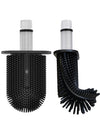
A toilet brush with a built-in soap dispenser saves time. You press once to release cleaning solution onto the head, then scrub. There is no need to pour product into the bowl or carry a separate bottle to the toilet.
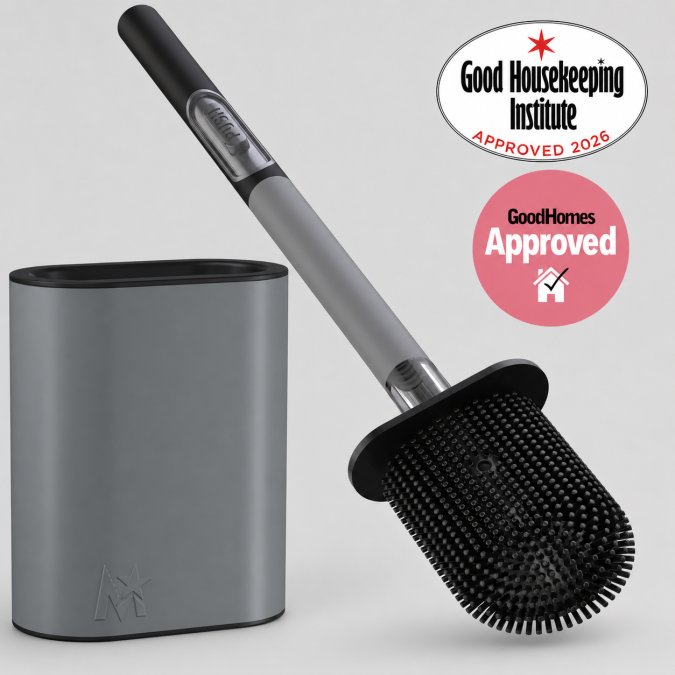
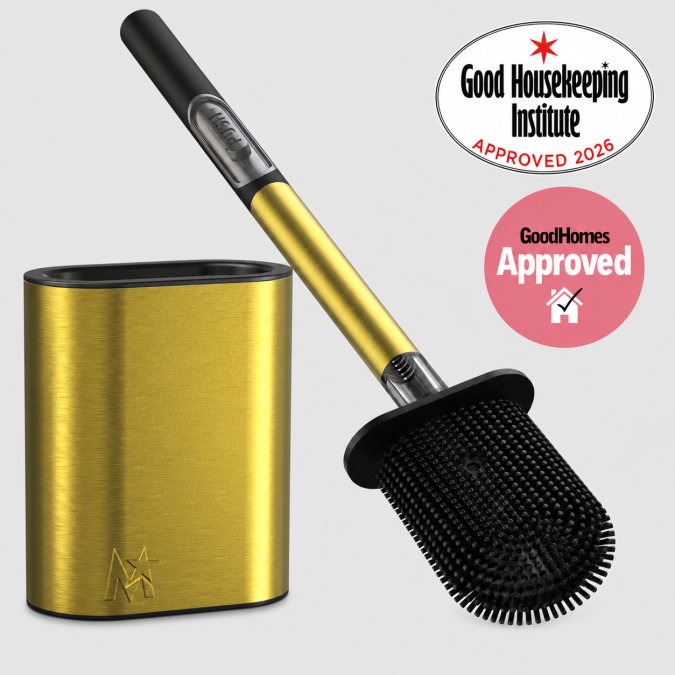
The Moostar Push Brush is designed around this idea. It has a silicone soap-dispensing head, a 304-grade stainless steel body and long and short silicone bristles for different parts of the bowl. The head can be replaced. It is Good Housekeeping Approved 2026 and Good Homes Approved 2026, and it won a Woman&Home Reader Approved Award for 2026.
If you want a finish that suits your bathroom, the Push Brush comes in a stainless steel version, a grey stainless steel version and a black stainless steel version. Each one costs £17.99. For a warmer accent, the Moostar Luxe Copper Toilet Brush & Holder costs £25.99 and has a silicone brush head.
Choose the version that fits the space. For a side-by-side look at features before you decide, see our toilet brush buyer's guide and comparison. A grey or black brush suits a neutral bathroom, while copper works well with warm tones and natural textures. If black suits your room, you can view the black stainless steel Push Brush in detail. Pick the finish you will be happy to see every day.

The three finishes and their prices are set out below for quick comparison. You can also view the stainless steel Push Brush in full detail.

| Product | Finish | Price |
|---|---|---|
| Push Brush | Stainless steel | £17.99 |
| Push Brush | Grey stainless steel | £17.99 |
| Push Brush | Black stainless steel | £17.99 |
| Moostar Luxe Copper Toilet Brush & Holder | Copper, silicone brush head | £25.99 |
Frequently Asked Questions
How do I keep my bathroom organised and clean?
Sort items into keep, discard and relocate piles, then give each remaining item a fixed home such as a basket, drawer divider or shelf. Keep daily essentials within reach and clear surfaces at the end of each day so cleaning takes minutes rather than an hour. Review storage every few months, since clutter tends to build up gradually in cupboards and under sinks.
What should I clean in the bathroom every day?
Daily tasks are usually the toilet bowl and seat, the sink and tap, and any surfaces that get wet or splashed. Wipe down the handle and flush button, rinse the toilet brush and return it to its holder, and dry the sink to limit water marks. These quick habits prevent grime from building up and make the weekly deep clean far easier.
How often should you clean a toilet brush?
Rinse the brush head after every use so it does not hold moisture or residue. Give it a more thorough clean once a week with hot soapy water or a suitable disinfectant, and replace the head when the bristles look worn. Keeping the brush dry between uses also helps limit odours and bacteria.
How do you keep a toilet brush hygienic?
Store the brush in a holder that lets it drain and dry rather than sitting in standing water. A silicone head is non-porous, so it can be rinsed fully clean. Replacing the head when it wears out is the simplest way to keep the tool hygienic over time.