Table of Contents
- Why Stainless Steel Toilet Brushes Outlast Plastic and Silicone
- The Materials and Construction Behind Their Longevity
- The Benefits of Stainless Steel Bathroom Accessories
- How to Maintain Your Stainless Steel Toilet Brush for Maximum Lifespan
- When to Replace Your Toilet Brush (and What to Look For)
- Hygienic Toilet Brush Alternatives: What to Look For
- Frequently Asked Questions
Last Updated: September 17, 2026
Why Stainless Steel Toilet Brushes Outlast Plastic and Silicone
A stainless steel toilet brush lasts longer because the handle and holder resist corrosion, while the head can be replaced instead of the whole unit. That single design decision is why stainless steel toilet brushes routinely outlast the plastic brushes sold in supermarkets.

The problem with cheap brushes is rarely the bristles. It is the metal collar that rusts, the plastic that yellows, and the head that cannot be separated from the handle. At Moostar, we built the Push Brush around 304-grade stainless steel and a replaceable silicone head precisely so the part that wears out is the cheap part.
Below, we break down exactly what makes these brushes last, how to maintain one properly, and when to replace the head rather than the whole brush.
The Materials and Construction Behind Their Longevity
Durability comes down to material choice and how the brush is assembled. A stainless steel toilet brush combines a corrosion-resistant metal body with a non-porous head, so neither part degrades quickly in a damp bathroom.
304-Grade Stainless Steel: What Makes It Rust-Resistant
304-grade stainless steel is an austenitic alloy containing chromium and nickel, and the chromium forms a passive oxide layer on the surface that resists rust. That layer repairs itself when scratched, which is why the finish stays intact in a wet room.
Cheaper brushes use mild steel with a thin chrome plating. Once that plating chips, usually at the base where it sits in water, rust starts within weeks. Solid 304 steel has no plating to chip.
Silicone Heads vs Traditional Bristles
Silicone heads outlast nylon bristles because they do not splay, fray, or trap debris. Traditional bristle brushes mat down over time and hold water at the base of the tuft, which is where bacteria and odour build up.
Silicone is non-porous, so it rinses clean and dries fast. Dual-length bristles, short on one side and long on the other, also let one head clean both the wide bowl surface and the rim without a second tool.
The Benefits of Stainless Steel Bathroom Accessories
Stainless steel bathroom accessories hold up better than plastic or coated metal because they resist moisture, cleaning chemicals, and physical knocks. The same properties that keep a brush handle intact apply to the holder it sits in.
The practical benefits come down to four things:
- Corrosion resistance: no rust streaks on tiles or in the holder
- Surface finish: brushed steel hides water spots better than polished chrome
- Weight and stability: a heavier base does not tip over mid-clean
- Cleaning: a smooth metal surface wipes down in seconds
There is also a hygiene argument. A brush that dries quickly and does not hold water at its base is a less hospitable environment for the bacteria that cause bathroom odours.
How to Maintain Your Stainless Steel Toilet Brush for Maximum Lifespan
Maintenance is simple, and most of it takes seconds. The goal is to stop water sitting against the metal and to keep the head free of trapped debris.
V.2 STAINLESS STEEL TOILET BRUSH AND →
A routine that works:
- After each use, shake the head over the bowl so excess water drains away.
- Rinse the head under the flush or a running tap before returning it to the holder.
- Empty and rinse the holder weekly, since standing water is what corrodes even good steel over time.
- Wipe the handle and holder with a damp cloth and dry them.
- Every few weeks, check the head for stiffness or discolouration and replace it if needed.
When to Replace Your Toilet Brush (and What to Look For)
Replace the head when it stiffens, discolours, or stops flexing, and replace the whole brush only when the handle or holder is damaged. For a stainless steel brush with a replaceable head, that means you rarely buy a new brush at all.
Warning signs to watch for:
- Bristles that have gone stiff or brittle: silicone should stay flexible
- Persistent odour: a sign debris is trapped where rinsing cannot reach
- Rust spots on the handle or holder: the first sign of failing material
- A cracked or loose head: it will not scrub effectively
If you are still using a one-piece plastic brush, the moment the bristles splay is the moment to replace the whole thing. With a replaceable-head design, you swap one part and keep the rest.
Hygienic Toilet Brush Alternatives: What to Look For
The most hygienic toilet brush alternatives share three traits: a non-porous head, a design that drains and dries, and a head you can replace without touching it. Everything else is cosmetic.
When comparing options, check for:
- Non-porous material: silicone rather than nylon bristles
- Drainage: a holder that lets water escape instead of pooling
- Replaceable heads: so hygiene does not mean replacing the whole brush
- A hands-clean swap: a push-release mechanism means you never handle the used head
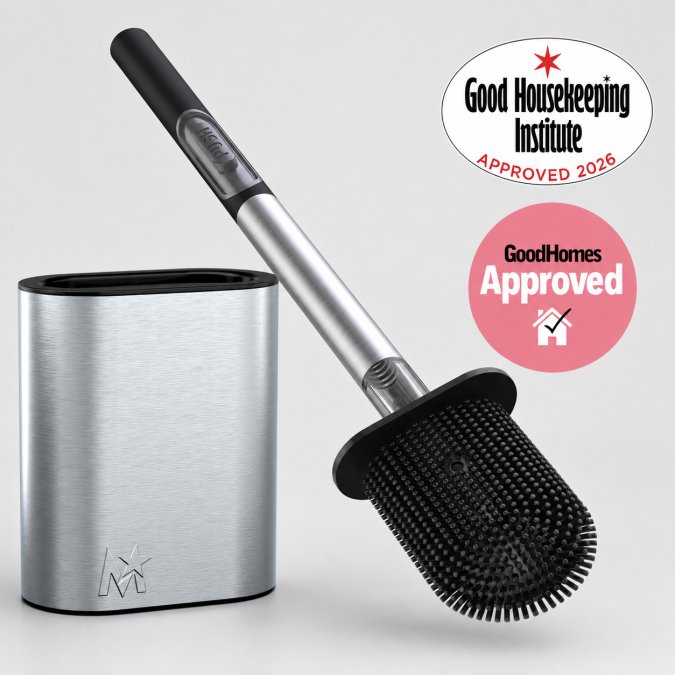
The Moostar Push Brush meets all four. Its one-push release lets you change the silicone head without touching it, the built-in 40ml soap reservoir dispenses cleaning solution directly onto the bristles, and it is available in brushed steel, grey, and black finishes to match an existing bathroom. It holds Good Housekeeping Approval 2026 and Good Homes Approval 2026, and won the Woman and Home Reader Approved award.
Feature |
Why It Extends Lifespan |
|---|---|
304-grade stainless steel |
Resists rust and corrosion in damp rooms |
You replace the cheap part, not the brush |
|
Non-porous silicone |
Rinses clean, dries fast, no trapped debris |
One-push release |
Hygienic head changes without handling |
Dual-length bristles |
One head cleans bowl and rim, less wear |
Most bathroom cleaning tools fail for the same reason: the part that touches water is the part that cannot be replaced. Moostar built the Push Brush to fix that, pairing a rust-resistant 304-grade stainless steel body and holder with a flexible, non-porous silicone head you can swap in seconds using the one-push release. The built-in soap-dispensing handle puts cleaning solution exactly where you need it, and the range comes in brushed steel, grey, and black to suit your bathroom. Shop the collection and replace the head, not the brush.

Frequently Asked Questions
Is stainless steel better than plastic for toilet brushes?
Yes, stainless steel offers significant durability advantages over plastic. Plastic handles and holders crack, discolour, and harbour bacteria over time, especially in damp bathroom conditions. Stainless steel, particularly 304-grade, resists corrosion and rust, maintaining its appearance and structural integrity for years. It also looks more premium and fits modern bathroom aesthetics. The Moostar Push Brush combines a 304-grade stainless steel body with a replaceable silicone head, giving you the best of both materials.
How long should a high-quality toilet brush last?
A well-made stainless steel toilet brush can last many years, far longer than typical plastic brushes that may need replacing every 6 to 12 months. The key is the replaceable silicone head, which you swap when worn, while the stainless steel handle and holder remain. This design means you are not throwing away the entire brush. With proper care, the stainless steel components of a Moostar Push Brush are built to last.
Does stainless steel rust in a bathroom environment?
Stainless steel is designed to resist rust, but not all grades are equal. 304-grade stainless steel, like that used in Moostar's Push Brush, contains chromium that forms a protective layer against moisture and corrosion. In a humid bathroom, lower-grade metals may spot or rust, but 304-grade holds up well. To keep it in top condition, dry the brush after use and avoid leaving it sitting in standing water.
Are silicone heads more durable than traditional bristles?
Silicone heads offer distinct durability and hygiene advantages over traditional nylon or plastic bristles. Bristles can splay, trap debris, and become a breeding ground for bacteria, requiring frequent replacement. Silicone is non-porous, rinses clean easily, and does not absorb odours. It also flexes to reach under the rim without scratching. The Moostar Push Brush uses dual-length silicone bristles that clean both large surfaces and hard-to-reach areas, and the head is replaceable when needed.