Table of Contents
- Why Silicone Toilet Brushes Are Replacing Traditional Bristles
- Silicone Toilet Brush Comparison: What to Look For in 2026
- How to Sanitise a Toilet Brush Without Damaging the Silicone
- The Best Toilet Brush for Hard Water Stains: What Actually Works
- Moostar vs Other Premium Silicone Brushes: Key Differences
- Common Objections About Silicone Toilet Brushes, Answered
- Conclusion
- Frequently Asked Questions
Last Updated: September 14, 2026
Why Silicone Toilet Brushes Are Replacing Traditional Bristles
A silicone toilet brush is a cleaning tool built with a flexible, non-porous silicone head rather than nylon or plastic bristles. The design change sounds minor. The hygiene implications are not. Traditional bristle brushes trap water, particles and bacteria deep inside the tufts, and no amount of rinsing fully clears them.
This guide from Moostar breaks down what actually separates a good silicone toilet brush from a bad one in 2026, which head and handle designs hold up over time, and how to keep yours hygienic without degrading the silicone. Loved by thousands of homes across the country, the questions we hear most often are the ones this article answers.
The core problem with bristles is structural. Water sits in the gaps between filaments, the head stays damp for hours, and the base of the brush becomes a reservoir. Silicone has no gaps to trap anything. It rinses clean under a tap in seconds and dries fast enough that bacteria have little chance to establish.
A close-up of a modern silicone toilet brush with a flexible grey head resting in a brushed steel holder beside a white toilet bowl in a bright, clean bathroom
That single material difference drives most of the switch. But material alone does not make a brush good. Head geometry, handle mechanics and the release system matter just as much, and those are where cheap silicone brushes fall apart.
Silicone Toilet Brush Comparison: What to Look For in 2026
The best silicone toilet brush for most households combines a flexible head that reaches under the rim, a handle that does not drip when lifted, and a head-release mechanism you can operate one-handed. Everything else is secondary.
Here is how the key design choices compare:
Feature |
What Good Looks Like |
What to Avoid |
Why It Matters |
|---|---|---|---|
Head shape |
Flat with angled tip |
Round bulb |
Reaches under rim and into corners |
Bristle flexibility |
Soft, tapered fins |
Stiff, thick fins |
Cleans without splashing |
Release system |
One-push button |
Twist or pull |
Keeps hands away from the head |
Handle |
Sealed, weighted base |
Hollow, light handle |
Prevents drips on the floor |
Finish options |
Brushed steel, gold, matt |
Single plastic colour |
Matches bathroom fittings |
Head Design and Bristle Flexibility
A flexible head is not a marketing detail. Stiff silicone fins push water around the bowl instead of lifting residue off the surface. Soft, tapered fins flex against the porcelain and get into the curve under the rim where stains actually form.
What most guides miss is that head shape matters more than bristle count. A flat head with an angled tip covers more surface per stroke than a round bulb, and it reaches the narrow channel at the back of the bowl that round heads cannot touch.
Handle Mechanics and Release Systems
Handle mechanics decide whether you get water on the floor. A hollow handle fills with water during cleaning and releases it when you lift the brush, which is why so many people end up with puddles around the base. A sealed handle with a weighted base keeps the water where it belongs.
The release system is the other half. A one-push mechanism lets you drop the head into the bin without touching it, which matters if you are replacing heads regularly for hygiene reasons.
How to Sanitise a Toilet Brush Without Damaging the Silicone
Sanitising a silicone toilet brush takes about five minutes and needs nothing more aggressive than hot water, a mild detergent and a disinfectant spray. Silicone tolerates heat well, but it does not tolerate abrasive scrubbing or solvent-based cleaners.
Work through this routine weekly:
- Rinse the head under hot running water to clear loose residue
- Spray with a bathroom disinfectant and leave for the manufacturer's stated contact time
- Wipe the handle and base with a separate cloth, never the same one used on the bowl
- Stand the brush upright to air dry fully before returning it to its holder
- Replace the head when the fins start to lose their shape or discolour
A common mistake is storing the brush wet in a closed holder. Even silicone will develop a smell if it never dries out. Airflow between uses does more for hygiene than any cleaning product.
The Best Toilet Brush for Hard Water Stains: What Actually Works
The best toilet brush for hard water stains is one with flexible silicone fins that can apply sustained pressure against the mineral deposit without scratching the porcelain. Hard water leaves calcium and limescale that bond to the bowl surface, and stiff bristles tend to skate over the top of the deposit rather than lift it (water.org.uk).
Silicone has an advantage here because the fins conform to the curve of the bowl. Applied with steady pressure, they work the limescale from the edges inward. Pair the brush with a limescale-specific cleaner and let it sit before scrubbing. The brush removes the softened deposit; the cleaner does the chemistry.
Where silicone brushes genuinely fall short is on thick, years-old scale. If the deposit has built up over a long period, no brush will remove it in one pass. Expect to repeat the process across several cleaning cycles before the bowl comes back to a smooth finish.
Moostar vs Other Premium Silicone Brushes: Key Differences
Moostar sits at the premium end of the silicone toilet brush market, and the differences come down to three things: the one-push release mechanism, the built-in soap-dispensing handle, and the finish range. The collection is available in brushed steel and gold, which matters if you are matching existing bathroom fittings.
On the release mechanism, a one-push system keeps your hands clear of the head entirely. On the handle, the soap-dispensing design means you are not juggling a separate bottle while cleaning. Neither feature is unique in the category, but the combination is what contributes to its appeal.
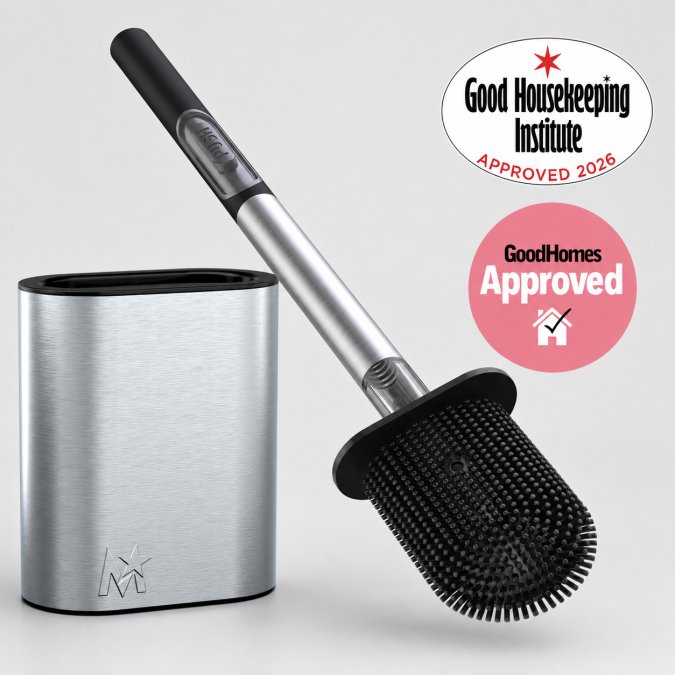
The Moostar collection holds Good Housekeeping Approved 2026 and GoodHomes Approved 2026 status, and won the Readers Approved award from Woman and Home. Those are independent assessments, not self-declared claims, and they are the reason we can point to the design rather than just describe it.
Where the brush falls short: the premium finishes cost more than a standard supermarket brush, and the replaceable heads are an ongoing cost rather than a one-off purchase. If you want the cheapest possible option, this is not it. If you want a brush that lasts and looks like part of the bathroom rather than an afterthought, the maths works out over the life of the product.
Common Objections About Silicone Toilet Brushes, Answered
The most common objection is that silicone fins will slide around the bowl instead of scrubbing. In practice, the opposite happens. Soft fins flex and conform to the surface, so they maintain contact across the curve of the bowl rather than skipping over it the way stiff bristles do.
The second objection is price. A silicone toilet brush costs more upfront than a bristle brush, and replaceable heads add ongoing cost (Best toilet brushes, tried and tested). The trade-off is lifespan and hygiene: silicone does not degrade the way bristles do, and it does not harbour bacteria between uses.
Will it fit a small bathroom? A silicone brush with a compact head and a slim holder takes up less floor space than most bristle brushes, and the sealed handle means no drip tray is needed. Measure your gap first if space is genuinely tight.
Conclusion
Choosing a silicone toilet brush comes down to head flexibility, handle sealing and the release mechanism, not the material alone. Get those three right and the hygiene benefits follow.
Moostar builds its collection around exactly those priorities: a flexible non-porous silicone head, a one-push release for hygienic head replacement, a built-in soap-dispensing handle, and finishes including brushed steel and gold to match your bathroom.
Frequently Asked Questions
Are silicone toilet brushes better than traditional ones?
Silicone heads are non-porous, so they do not absorb water or trap debris the way nylon bristles can. They rinse clean under the tap and dry quickly, which limits the damp environment bacteria need to multiply. The flexible tips also reach under the rim and into the bend more easily than stiff bristles. For everyday cleaning and hygiene, a silicone toilet brush is a practical upgrade over a traditional bristle brush.
How do you clean a silicone toilet brush?
Rinse the head in hot water after each use and shake off excess. Once a week, wash it with warm water and a mild bathroom cleaner, then leave it to air dry completely before returning it to the holder. For deeper cleaning, soak the head in a diluted bleach solution for no more than 10 minutes, rinse thoroughly and dry. Avoid abrasive pads or strong solvents, which can degrade the silicone over time.
Do silicone toilet brushes scratch porcelain?
No. Silicone is softer than the glazed surface of a porcelain toilet bowl, so it will not scratch or dull the finish during normal use. This is one reason silicone toilet brushes are popular in homes with older or more delicate sanitaryware. The risk of scratching comes from grit or limescale trapped against the surface, so rinse the head before scrubbing and avoid using abrasive powders alongside any brush.
How long does a silicone toilet brush last?
A quality silicone head typically lasts six to twelve months with regular use, depending on water hardness and how often it is cleaned. The handle and holder usually last much longer. Replaceable heads mean you only swap the part that wears out, which keeps long-term costs down. If the silicone becomes tacky, discoloured or starts to split, replace the head rather than continuing to use it.