How to Clean Under the Toilet Rim Properly (Without Your Brush Head Fraying in Months)
The rim is the dirtiest part of the toilet, and the part most brushes can't actually reach. Limescale, bacteria, and mineral deposits build up under the lip where water jets out with each flush, and if yours is only being swiped at with a stiff plastic brush, it's probably not coming clean. Here's how to do it properly, and why your brush keeps falling apart in the process.
Step 1: Lower the water level
Pour a bucket of water quickly into the bowl. This forces the water level down and exposes more of the surface under the rim, so your cleaner can sit on the stains instead of diluting in the water.
Step 2: Apply a gel cleaner under the rim
A thick, clinging toilet gel or a citric-acid-based descaler works far better than thin liquid bleach. Squeeze it generously right up under the lip, all the way around. For heavy limescale, soak a piece of kitchen roll in white vinegar and press it up under the rim so it stays in contact with the scale.
Step 3: Let it dwell
This is the step everyone skips. Leave the cleaner for at least 15 to 30 minutes (overnight for stubborn scale). The chemicals do the hard work; the brush should only need to finish the job, not scrape.
Step 4: Scrub with the right tool
This is where most brushes give up. Traditional bristle brushes fray because their stiff nylon bristles bend permanently every time they're forced up against the rim at an angle, and they trap grime deep between the bristles where it can't be rinsed out. Within a few months the head is splayed, clogged, and harbouring the very bacteria it's meant to remove.
A flexible silicone head solves both problems. The flat, pliable blade flexes flush against the curve of the rim, so it reaches the underside of the lip and the water jets without being bent out of shape. Non-porous silicone doesn't trap limescale or hair, so a quick rinse under the flush and it's genuinely clean again, and it dries in minutes instead of dripping in the holder.
Work around the whole rim, paying attention to the water jets, then flush while holding the brush in the stream to rinse it.
Step 5: Keep it that way
A 60-second wipe under the rim once a week prevents scale from ever getting established, which means less scrubbing, less harsh chemical, and a brush that lasts. Bleach-soaking bristle heads in the holder is what kills them fastest, so skip that habit.
The short version: soften the grime with a dwelling cleaner first, then let a flexible silicone brush do the reaching. Your rim gets properly clean, and your brush head stays intact for years rather than months.
A brush head that won't fray
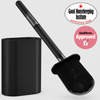
Moostar silicone toilet brushes are built for exactly this job: a flexible, non-porous silicone head that cleans under the rim, rinses clean in seconds, and doesn't splay or fray like plastic bristles.