Written by Erica, Founder of Moostar
Last updated: 22 October 2026
Erica founded Moostar, the UK brand behind the Soap Push silicone toilet brush.
Yes, there are better alternatives. The drip problem comes from bristles that hold water and pots that let it pool, so the fix is a head that sheds water plus a holder that keeps whatever is left contained. The strongest all-round answer is a non-porous silicone brush stored in a sealed base, such as the award-winning Moostar Soap Push, combined with one free habit: letting the brush drip over the bowl for a moment before you put it away.
Why plastic toilet brushes drip in the first place
A standard plastic brush has hundreds of nylon or polypropylene bristles packed tightly together. Every gap between them holds water, and that water runs out as soon as you lift the brush. Expert Reviews notes that bristles are "so tightly packed together that it's impossible to clean them perfectly", which is also why they stay wet for so long.
The holder makes it worse. When home reviewer Mrs House compared six popular UK brush sets (updated October 2026), none of the holders drained, and the advice was to "tip the pot out after use". Which? even measures how much water a brush still holds 24 hours after going back in its holder, because that test "weeds out brushes that could harbour germs and drip on your floor".
So drips have two sources: water trapped in the head, and water with nowhere to go once it leaves the head. A good alternative has to deal with both.
The realistic drip-free alternatives compared
| Option | How it tackles drips | Watch-outs | Ongoing cost |
|---|---|---|---|
| Silicone brush head | Non-porous silicone holds far less water than bristles and rinses clean quickly | Feels different to use; very cheap, floppy designs can struggle on stubborn marks | Low; replace the head when worn |
| Sealed-base holder | Any drips that do fall stay inside the base rather than reaching the floor | Rinse and empty the base now and then, as with any holder | None |
| Wall-mounted holder | Keeps the brush off the floor, so nothing collects around the toilet base and floor cleaning is easier | Needs a suitable wall spot; adhesive mounts suit smooth surfaces | None |
| Disposable pad system | No wet head to store: you click off the used pad after cleaning | Refills to keep buying and more waste; the handle and caddy still need cleaning | Ongoing refills |
| Drip over the bowl | Gives the head time to shed water into the toilet, not onto the floor | Takes a few seconds (or minutes) of patience | Free, works with any brush |
1. Silicone brushes
Swapping bristles for silicone deals with the first source of drips. Which? says newer silicone brushes "often have an edge over traditional nylon bristles" and explains that "silicone is non-porous, so it's less likely to harbour bacteria and grime rinses off it more easily". Be aware that silicone brushes are not all equal: Expert Reviews found some silicone heads shaped like bristle brushes "don't do a great job on stubborn dirt", and Mrs House reported owners calling some budget silicone brushes weak scrubbers.
2. Sealed-base holders
A sealed base deals with the second source. Instead of drips finding their way out of the pot and across your floor, they stay contained inside the base, where you can rinse them away when you next clean the bathroom. It is the tidiest option for floors, rugs and small bathrooms.
3. Wall-mounted holders
Lifting the brush off the floor stops it being kicked over and makes mopping around the toilet easier. Many modern brushes, including Moostar's, can either be wall-mounted with adhesive or stand on the floor.
4. Disposable pad systems
Wand kits such as REXO's disposable toilet brush kit (listed with a wall-mountable holder and 28 refills, with a one-click release) avoid storing a wet head at all. The trade-off is that you keep buying refills and binning pads, which some households will not want. We look at this choice in more depth in our guide to disposable vs reusable toilet brushes.
5. The drip-over-the-bowl habit
This costs nothing and helps with every brush. Which? recommends letting a used brush dry over the bowl before returning it to the holder, and Mrs House suggests trapping the handle under the closed seat so it drips for 10 to 15 minutes. Even a few seconds of shaking off over the water makes a difference.
Why the Moostar Soap Push is our all-round answer
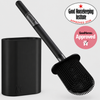
The Soap Push combines the options that work best together. The flexible, non-porous silicone head sheds water rather than soaking it up, and the brush sits in a sealed base, so any remaining drips stay contained in the base instead of reaching your floor. You can wall-mount it with the adhesive provided or stand it freestanding, the handle is 304 stainless steel, and a press of the button releases a little cleaner from the built-in reservoir through the head. When the head eventually wears, you replace just the head.
At the time of writing (22 October 2026) the Soap Push costs £17.99 in Stainless Steel, Black or Grey, and £25.99 in the Luxe Copper, Gold and Chrome finishes. A replacement head is £9.99, with free next-day UK delivery on orders over £10 and 90-day returns.
Honest caveats: silicone feels smoother than bristles, so it can take a clean or two to get used to the technique. No brush is completely drip-free straight out of the bowl, so the drip-over-the-bowl habit still helps. And like any holder, the base benefits from a rinse now and then.
What independent judges said
- woman&home Reader Approved Awards 2026: the Moostar Silicone Head Stainless Steel Toilet Push Brush won Best Toilet Brush with a score of 9.2/10. The tester said: "This product takes having a spotless loo to another level!" (woman&home)
- Good Housekeeping Institute Approved (2026).
- GoodHomes Approved: GoodHomes' tried-and-tested review concluded "It's Good Homes Approved!" and said "the adhesive provided attaches to the wall extremely easily and feels very secure". (GoodHomes review)
The verdict
If your plastic brush leaves a trail across the floor, you do not have to put up with it. A silicone head stops most of the water being carried in the first place, a sealed base keeps the rest contained, and a few seconds of dripping over the bowl finishes the job. Disposable systems also avoid drips, but at an ongoing cost. For a single, reusable answer, the Moostar Soap Push brings those strengths together.
Related reading: Better than a plastic toilet brush? Why silicone wins (and stops the drips) and where to keep your toilet brush.
FAQ
How do I stop my toilet brush dripping on the floor?
Let it drip over the bowl for a few seconds (or rest the handle under the closed seat for longer), then store it in a holder that keeps drips contained, such as a sealed base. A silicone head also holds much less water than bristles.
Do silicone toilet brushes drip less than plastic ones?
Generally, yes. Silicone is non-porous, so water runs off it rather than being trapped between dense bristles, according to Which? and Expert Reviews.
Is a disposable toilet brush better for drips?
It avoids storing a wet head, but you pay for refills and create more waste. A reusable silicone brush with a sealed base is a lower-waste route to the same tidy result.
How often should I empty my toilet brush holder?
Rinse and empty it whenever you clean the bathroom, or sooner if water has collected. This applies to every holder type.
Fact-checked against the sources below on 22 October 2026.
Sources
- Which?: Best toilet brushes, tried and tested
- Expert Reviews: Best toilet brush
- Mrs House: Best toilet brushes, six compared
- LatestDeals: REXO disposable toilet brush wand kit
- woman&home: Reader Approved Awards 2026, best cleaning products
- GoodHomes: Moostar Push Brush review
- Moostar: product range and prices