It's the question we hear more than any other: is a silicone toilet brush actually more hygienic than the traditional bristle brush, or is it just a nicer design? We looked at what cleaning and hygiene experts consistently say, and the answer comes down to one thing: what the brush is made of.
1. Bristles are porous, and experts say that's the problem
Traditional bristle brushes are made from plastic or natural fibres with a rough, porous surface. Cleaning experts consistently point out that this surface traps water, waste and bacteria deep between the bristles, where it stays long after the brush goes back in its holder. A damp, enclosed holder is the ideal environment for that residue to linger, and a bristle brush can effectively become a reservoir of germs sitting next to your clean toilet.
Experts also warn that bristles bend, fray and shed over time, and that a worn brush can't be properly cleaned even with disinfectant, because bacteria hide in scratches and gaps in the fibres.
2. Silicone is non-porous, so it dries fast and resists build-up
Silicone brushes are the opposite in every way that matters for hygiene. The non-porous surface doesn't absorb water or waste, so there are no deep gaps for bacteria to hide in. Experts highlight the fast drying time as a key benefit: because silicone sheds water rather than holding it, the brush dries quickly instead of sitting damp in a holder.
Silicone is also flexible rather than bristled, so debris rinses straight off under the tap rather than clinging to fibres. And instead of fraying like bristles, a silicone head flexes into the bowl and holds its shape, so it can be kept clean for its whole life.
3. The independent testing backs it up
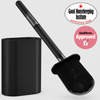
We don't just make this claim ourselves. The Good Housekeeping Institute tested toilet brushes in its best-toilet-brush round-up, and Moostar earned Good Housekeeping approval along with an Editor's Favourite mention. Woman & Home readers then voted Moostar the winner of a Reader Approved Award 2026 for best toilet brush.
Independent testers judge brushes on exactly the things experts care about: cleaning performance, durability and how easy the brush is to keep hygienic between uses. You can read more about both awards on our press page.
The bottom line
The expert consensus is simple: a traditional bristle brush traps moisture and bacteria in a porous, fraying surface, while a non-porous silicone brush dries quickly, rinses clean and doesn't give germs anywhere to hide. If hygiene is your priority, silicone is the clear choice.
Shop the award-winning brush
Ready to make the switch? Browse the full Moostar range, including the Moostar Luxe Copper, the Moostar Luxe Gold, the V2 in Black, the V2 in Grey, the V2 in Stainless Steel, and spare head bundles so your brush stays fresh for years.