Yes, a well-designed silicone toilet brush cleans everyday marks and fresh stains well, especially when it is paired with cleaner that has had a few minutes to work. What no brush does on its own, silicone or bristle, is shift set-in limescale or rust rings: those need a descaler or acid-based cleaner first. If you want silicone's hygiene benefits without giving up scrubbing power, choose a firm, dual-length silicone head with cleaner on tap, such as the Moostar Soap Push.
Why some people say silicone brushes "don't clean"
The complaint is real and worth taking seriously. On a Mumsnet housekeeping thread about toilet brushes, one poster called silicone "absolutely useless in terms of cleaning anything that might have dried", while others in the same thread preferred silicone because it rinses clean. In its October 2026 comparison, Mrs House reported owners describing some silicone brushes as weak scrubbers.
Expert Reviews explains why results vary: silicone brushes shaped like bristle brushes can have "weak bristles that don't do a great job on stubborn dirt", and "you'll have to get used to a different brushing technique". In other words, the material is not the whole story. Head design, firmness and technique matter just as much.
What actually removes each type of stain
| Stain | What it is | What shifts it | The brush's job |
|---|---|---|---|
| Fresh marks and everyday grime | Recent residue on the bowl surface | Toilet cleaner and a quick scrub | Does most of the work |
| Dried-on marks | Residue that has set on the porcelain | Cleaner left to soak for a few minutes, then a firm scrub | Scrubs once the cleaner has softened it |
| Limescale ring or tide mark | Mineral deposits from hard water | Descaler or acid-based cleaner, left to work; a toilet pumice stone used gently for the worst | Spreads product and finishes off |
| Rust-coloured stains | Mineral staining, often below the waterline | Acid-based cleaner, vinegar or lemon juice, left for an hour or so | Scrubs after the soak |
Which? advises applying cleaner around the tide mark and leaving it "for a few minutes or for as long as the information on the bottle recommends". For rust-like stains it suggests an acid-based cleaner, vinegar or lemon juice left "to sit for an hour or so" before scrubbing, and it notes that bleach will not remove limescale, only lighten it. For the most stubborn deposits, Which? suggests a toilet-specific pumice stone used gently, without much pressure.
The takeaway: if a stain has survived weeks of brushing, it is usually a chemistry problem, not a brush problem. A stiffer brush can scratch at it, but the stain only lifts properly once the right product has dissolved it.
How to get the most from a silicone brush
- Apply cleaner first and wait. Give it a few minutes, or the time on the bottle, before you scrub.
- Use the edge, not just the face. Expert Reviews notes that a spatula-style silicone head is well suited to tackling grime. Angle the head so the firmer edges and shorter bristles do the work on a mark.
- Work under the rim with the longer bristles. Flexible silicone bends into the curve rather than splaying.
- Keep on top of it. Silicone is at its best on regular cleans, before marks have time to set.
- Treat limescale separately. Use a descaler periodically in hard-water areas, as Which? suggests, then let the brush finish off.
- Rinse and drip. Rinse the head in the clean flush water and let it drip over the bowl before putting it away.
Where the Moostar Soap Push fits in
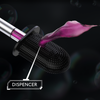
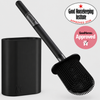
The Soap Push was designed around the two things that make silicone work harder: a head with both long and short silicone bristles, and cleaner exactly where you are scrubbing. A press of the button releases a little cleaner from the reservoir in the 304 stainless steel handle through the head, so you can top up product on a stubborn mark without reaching for a bottle. woman&home's tester, who named it Best Toilet Brush in the Reader Approved Awards 2026 (9.2/10), said: "This product takes having a spotless loo to another level!" It is also Good Housekeeping Institute Approved and GoodHomes Approved.
The brush stores in a sealed base, wall-mounted or freestanding, so drips stay contained rather than reaching the floor, and the head is replaceable when it eventually wears.
Honest caveats: silicone will not scour away years of limescale on its own, and it feels smoother than nylon, so expect a clean or two to adjust your technique. If you have a heavily scaled bowl, descale it first; after that, regular cleans with a silicone brush are much easier to keep on top of.
At the time of writing (22 October 2026) the Soap Push is £17.99 in Stainless Steel, Black or Grey and £25.99 in Luxe Copper, Gold or Chrome, with replacement heads at £9.99, free next-day UK delivery on orders over £10 and 90-day returns.
The verdict
Silicone toilet brushes do clean stubborn stains, provided the stain is the kind a brush can shift and the cleaner has had time to work. For set-in limescale and rust rings, the product does the heavy lifting with any brush. Choose a firm, dual-length silicone head with built-in cleaner and you get silicone's easy-rinse hygiene without trading away scrubbing power.
Related reading: how to get rid of limescale in a toilet and how to clean a toilet rim without your brush head fraying.
FAQ
Are silicone toilet brushes good for limescale?
They are good for spreading descaler and finishing off, but limescale is a mineral deposit that needs an acid-based descaler to dissolve it. No brush removes heavy limescale by scrubbing alone.
Do silicone toilet brushes scrub as well as bristle brushes?
It depends on the design. Expert Reviews found that floppy, bristle-shaped silicone heads can struggle on stubborn dirt, while firmer designs suit grime well. Pairing silicone with cleaner and a short soak closes most of the gap.
Why won't my toilet stain come off with a brush?
It is probably limescale or mineral staining. Apply a descaler or acid-based cleaner, leave it for the time on the label (Which? suggests an hour or so for rust-like stains), then scrub. A toilet pumice stone, used gently, can help with the worst deposits.
How long should I leave toilet cleaner before scrubbing?
Which? suggests a few minutes or as long as the bottle recommends. Do not leave undiluted bleach sitting in the bowl for more than a few minutes.