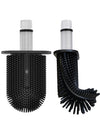
Last Updated: November 8, 2026
Quick Summary
Chrome and stainless steel describe different things: stainless steel is the metal, while chrome is a finish that can sit on a stainless body. Choose by matching your existing taps and fittings, checking the head design, and considering a soap-dispensing model. A toilet brush with a replaceable silicone head suits most bathrooms.
- Moostar's Luxe Chrome Toilet Brush & Holder uses a 304-grade stainless steel body with a chrome finish.
- Choose a finish that matches silver taps, cool-toned tiles or other fittings you cannot easily change.
- Rinse the silicone head after each clean and let it dry before returning the brush to its holder.
- Push Brush models include a 40ml reservoir and push-button dispenser for cleaning solution.
- Both chrome and copper Luxe models are Good Housekeeping Approved 2026 and Good Homes Approved 2026.
Table of Contents
- What Separates a Chrome Toilet Brush From a Stainless Steel One
- Finish and Look: Matching Your Bathroom Fittings
- Rust Resistance and Long-Term Durability
- Why the Brush Head Matters More Than the Handle
- Soap Dispensing Models and Everyday Convenience
- How to Clean a Toilet Brush and How Often to Replace the Head
- Choosing Your Brush for a Renovated Bathroom
- Frequently Asked Questions
What Separates a Chrome Toilet Brush From a Stainless Steel One
Choosing between a chrome toilet brush and a stainless steel brush comes down to three things: finish, head design and how the brush holds up over time. Both metals are used in bathroom accessories, and both can look smart beside silver taps. The difference lies in the details that shape everyday use.
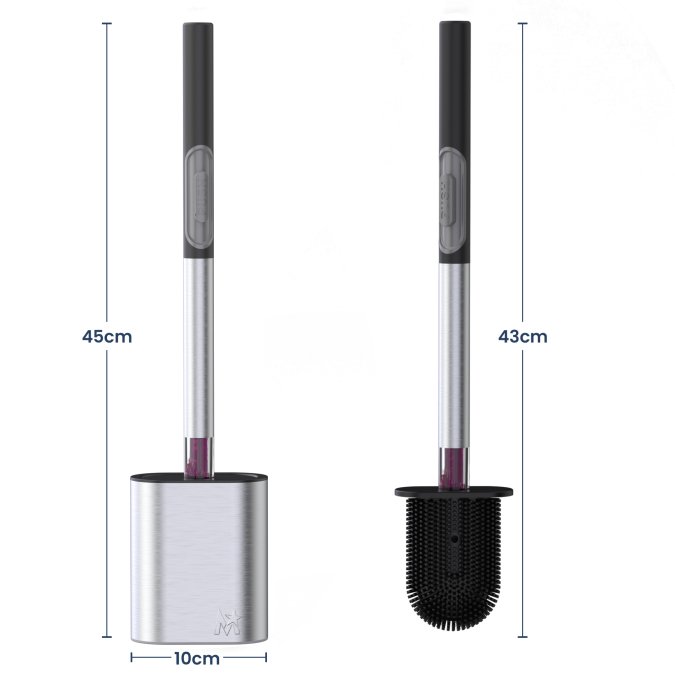
At Moostar, we make toilet brushes built around a replaceable silicone head, so the choice of metal sits alongside a few other practical decisions. Our Luxe Chrome Toilet Brush & Holder pairs a 304-grade stainless steel body with a chrome finish and a flexible silicone head. The Push Brush range uses the same stainless steel and silicone approach in stainless, black, grey and copper finishes.

Note that "stainless steel" describes the material, while "chrome" describes a finish. A chrome-finish brush can still be built from stainless steel, which is why the comparison often comes down to appearance and head design rather than metal alone.
Finish and Look: Matching Your Bathroom Fittings
Start with what is already in the room. Silver taps, cool-toned tiles and contemporary fittings tend to suit a chrome finish, while a brushed stainless look sits comfortably beside brushed nickel or matt black hardware. Most mismatches come from ignoring the fittings you cannot easily change.
Our Luxe Chrome model is designed to match silver taps and cool-toned tiles. If your bathroom leans warmer, the Luxe Copper adds a metallic accent that suits natural textures. For a quieter, uncluttered look, the grey Push Brush works well in neutral and smaller spaces.

Lighting also changes how a finish reads. A polished chrome can look bright under spotlights and softer in daylight, so it is worth comparing samples in the room where the brush will live rather than judging from a photograph alone.
Rust Resistance and Long-Term Durability
Rust is the practical concern most buyers raise. Our Push Brush and Luxe models both use 304-grade stainless steel bodies, which the product listings describe as rust-resistant.
Durability also depends on what touches the bowl. Our brushes use a silicone head that can be replaced, so the part that wears fastest does not have to be the whole brush. Rinse the head after each clean, return the brush to its holder, and change the head when it looks worn.
Let the head dry between uses before returning the brush to its holder.
Why the Brush Head Matters More Than the Handle
Many buyers focus on the handle, but the head does the cleaning. A flexible silicone head is designed to bend around the curve of the bowl and under the lip.
Our brushes have long and short silicone bristles, so one head can cover larger surfaces and tighter spots. Because the head is replaceable, you refresh the cleaning surface without buying a whole new set.
Before buying, check whether the head clips or unlocks easily and whether replacement heads are sold separately. A brush that is easy to clean but awkward to refresh will cost more over time.
Soap Dispensing Models and Everyday Convenience
A soap-dispensing handle removes a step from the routine. Our Push Brush models include a built-in 40ml reservoir and a push-button dispenser that sends cleaning solution onto the bristles. You press once, then clean, without reaching for a separate bottle.
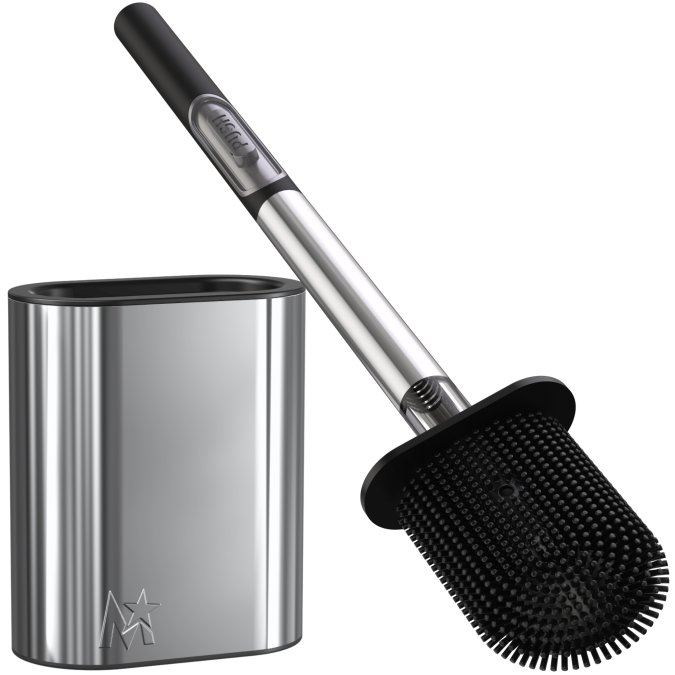
The trade-off is refilling. A 40ml reservoir needs topping up regularly in a busy household, so consider how often you clean. If you prefer to use your own cleaner, a non-dispensing brush may suit you better.
How to Clean a Toilet Brush and How Often to Replace the Head
Clean the brush after each use by pressing the button to dispense solution, scrubbing the head, then rinsing it thoroughly under running water. Shake off excess water and return the brush to its holder with the head clear of standing water.
Replace the silicone head when the bristles look worn, as the replaceable head is designed to allow.
Choosing Your Brush for a Renovated Bathroom
If you are refitting a bathroom, choose the brush last. Settle the taps, tiles and accessories first, then pick the finish that sits best with them. Keeping the brush and holder in the same finish family as your other fittings avoids a patchwork look.
For a complete renovation, our Luxe Chrome and Luxe Copper models suit a coordinated scheme, while the stainless, black and grey Push Brush options cover more modern and minimalist designs. Both the chrome and copper Luxe models are Good Housekeeping Approved 2026 and Good Homes Approved 2026, and are Woman & Home Reader Approved Awards 2026 winners.
Choose a freestanding holder if you want to keep the floor clear and easy to mop, or a wall-mounted holder if floor space is tight. Either way, the brush you pick should look like it belongs in the room and be easy to live with every day.
Get started with Moostar and find the toilet brush that fits your bathroom and your routine.
Frequently Asked Questions
Is chrome or stainless steel better for a toilet brush?
Both are strong choices because the handle is the part that sits in the bathroom air and gets wet every day. Moostar's brushes use 304-grade stainless steel bodies, which the product listings describe as rust-resistant. Chrome gives a bright, polished look that suits silver taps and cool-toned tiles. If you want the lowest maintenance and a finish that matches a modern bathroom, pick the one whose look you like best, since both materials handle everyday wipe-downs well.
Does chrome rust in a bathroom?
Moostar's Luxe Chrome Toilet Brush & Holder pairs its chrome finish with a 304-grade stainless steel body, which the listing describes as rust-resistant. Moostar's Luxe Chrome Toilet Brush & Holder pairs its chrome finish with a 304-grade stainless steel body, so the structure itself stays rust-resistant.
How often should you replace a toilet brush?
Replace the brush head when the bristles look worn. Moostar's brushes are designed with a replaceable silicone head, so you change only the part that wears out and keep the same handle and holder. This makes the upkeep simpler than replacing a whole brush each time.
Are silicone toilet brush heads more hygienic than bristle heads?
Moostar's silicone heads are non-porous and rinsed after each use. Moostar's silicone heads are rinsed after cleaning and returned to the holder, and the head is replaced when worn. Good hygiene still depends on rinsing well and drying the head rather than leaving it sitting in standing water.