Table of Contents
- Why Flexible Silicone Toilet Scrubbers Beat Traditional Bristles
- Soap Dispensing Toilet Brush Benefits for Everyday Cleaning
- How to Clean a Toilet with a Silicone Brush
- Best Practices for Toilet Brush Maintenance
- Durability and Long-Term Value: What You Actually Pay For
- Choosing the Right Silicone Toilet Scrubber for Your Bathroom
- Frequently Asked Questions
Last Updated: 16 September 2026
Why Flexible Silicone Toilet Scrubbers Beat Traditional Bristles
Flexible silicone toilet scrubbers are cleaning tools with soft, non-porous heads that bend to follow the curve of a toilet bowl, rather than stiff nylon bristles that stay rigid. That single design difference changes how well a brush cleans, how hygienic it stays between uses, and how long it lasts. This guide from Moostar breaks down the benefits of flexible silicone toilet scrubbers, from rim coverage to long-term value, so you can decide whether the switch is worth it.
Traditional brushes have a structural problem: stiff bristles splay outward under pressure, which means they scrub the flat sides of the bowl well but miss the tight underside of the rim entirely. Silicone flexes instead of splaying, so the head keeps contact with curved surfaces as you move it.
How Silicone Reaches Where Bristles Cannot
Silicone reaches under-rim areas and tight bowl curves because the head deforms to match the surface rather than resisting it. Dual-length bristles, long on one side and short on the other, let you switch between broad scrubbing and detail work without changing tools.
A common mistake is assuming a stiff brush is scrubbing harder and therefore cleaning better. In practice, the opposite is often true: pressure pushes nylon bristles flat against the porcelain, reducing the scrubbing surface that actually touches the stain.
The Hygiene Difference: Non-Porous vs. Nylon
Non-porous silicone does not absorb liquid or trap particles the way nylon does. Nylon bristles are made of many fine filaments packed together, and the gaps between them hold moisture and debris long after the brush leaves the bowl.
Silicone has a smooth, closed surface. Rinse it under the tap and it sheds water quickly, which means it dries faster and has far less to hold onto. That is the practical hygiene case for silicone toilet scrubbers: less trapped moisture, less lingering odour, and a head that looks and feels clean after rinsing.
Soap Dispensing Toilet Brush Benefits for Everyday Cleaning
A soap dispensing toilet brush benefits daily cleaning by putting the cleaning solution directly onto the head at the press of a button. Instead of juggling a bottle and a brush, you dispense and scrub in one motion.

The Moostar Push Brush carries a built-in 40ml tank in the handle, which holds enough solution for several cleaning sessions before a refill. That matters more than it sounds: the most common reason people skip a quick mid-week clean is the faff of gathering products. Remove that step and the job gets done more often.
NHS guidance on hygiene and preventing the spread of germs at home
How to Clean a Toilet with a Silicone Brush
Cleaning a toilet with a silicone brush follows the same logic as any other method, but the flexible head lets you work faster around the rim and under the waterline. Here is the sequence that produces a streak-free finish.

Step-by-Step: Getting a Streak-Free Finish
- Flush first to wet the bowl and clear loose debris.
- Press the button to dispense solution onto the silicone head.
- Start under the rim, working the long bristles into the hidden channel.
- Move down the sides in overlapping strokes, letting the head flex into the curve.
- Scrub below the waterline, where mineral staining builds fastest.
- Flush again while holding the brush over the water to rinse the head clean.
- Shake off excess water and return the brush to its holder.
The step most people skip is the final rinse. Rinsing the head in clean flush water before it goes back in the holder is what keeps the brush itself from becoming the dirtiest object in the room.
Best Practices for Toilet Brush Maintenance
Toilet brush maintenance comes down to three habits: rinse after every use, store dry, and replace the head on schedule. None of these takes more than a few seconds, and together they decide whether your brush lasts years or months.
- Rinse immediately. Do it while the bowl refills, before anything dries on.
- Let it drain. A holder that traps water at the base undoes the benefit of a fast-drying head.
- Clean the holder too. Wipe it out weekly; it collects drips even when the brush doesn't.
- Replace the head when bristles discolour or stiffen. On a silicone head this takes far longer than on nylon.
UK government guidance on cleaning and disinfection in the home
Durability and Long-Term Value: What You Actually Pay For
Durability is where the maths gets interesting. A supermarket brush is cheap to buy and cheap to replace, but you replace it often, and each replacement is another head full of trapped moisture sitting in your bathroom.
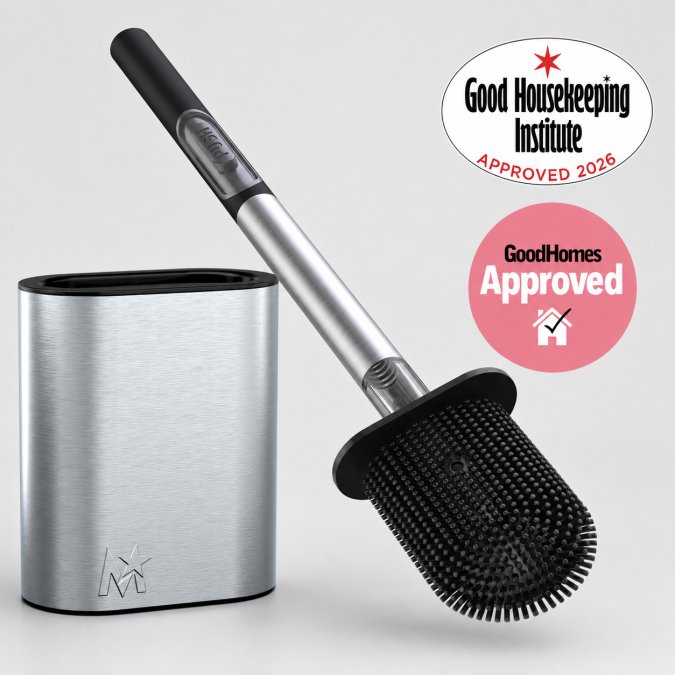
Silicone does not fray, does not splay, and does not absorb. The head on a Moostar Push Brush is replaceable on its own, so when it eventually wears you swap the head rather than the whole tool. The handle is 304-grade stainless steel, a rust-resistant alloy, which is the part most likely to fail on a budget brush.

| What You're Paying For | Traditional Nylon Brush | Silicone Brush with Replaceable Head |
|---|---|---|
| Head material | Porous nylon filaments | Non-porous silicone |
| Replacement | Whole brush | Head only |
| Drying time | Slow, holds water | Fast, sheds water |
| Rim coverage | Misses under-rim | Flexes into the channel |
| Handle | Often plastic or coated wire | 304-grade stainless steel |
The honest limitation: a silicone head feels different to use. If you are used to the scratchy resistance of nylon, the first few cleans feel smoother than expected. That smoothness is the head maintaining contact rather than skidding, but it takes a session to trust it.
Choosing the Right Silicone Toilet Scrubber for Your Bathroom
Choosing the right silicone toilet scrubber comes down to three things: how it mounts, how it dispenses, and whether the head is replaceable. Get those right and the rest is finish preference.
For tight bathrooms, a wall-mounted option frees the floor entirely; the Moostar Push Brush offers both wall and floor mounting, with a screw-free adhesive option for the wall setup.
On finishes, the range covers brushed steel and gold tones alongside black and grey, so it can be matched to existing fittings rather than hidden away. Moostar's collection has been approved by Good Housekeeping and Good Homes for 2026, and won the Reader Approved award from Woman and Home.
If you want the lowest-cost way to try silicone, the 1 Pack Replaceable Silicone Brush Head at £9.99 fits the Push Brush handle. For a full setup, the V.2 Silicone and Stainless Steel Toilet Brush in grey is £17.99, and the Push Brush + Spare Head Bundle at £25.88 adds a second head so you are covered for the long term.
Which? guidance on buying household cleaning products
Frequently Asked Questions
Are silicone toilet brushes more hygienic than traditional bristle brushes?
Yes. Silicone toilet scrubbers have a non-porous surface that doesn't absorb water or trap particles the way nylon bristles do. Traditional brushes hold moisture and debris deep within the bristles, creating a breeding ground for bacteria. Silicone rinses clean under running water and dries quickly, leaving nowhere for germs to settle. Moostar's silicone heads are also replaceable, so you can refresh the brush periodically without buying a whole new unit.
Do flexible silicone toilet scrubbers clean under the rim effectively?
They do. The flexibility of silicone allows the brush head to bend and contour around the curve of the rim, reaching areas that stiff bristles miss. Moostar's Push Brush features dual-length bristles: longer ones for the bowl's curves and shorter ones for stubborn spots. The soap-dispensing handle lets you push cleaning solution directly onto the bristles, so you're scrubbing with product exactly where it's needed, including under the rim.
How do you clean and maintain a silicone toilet brush?
After each use, rinse the silicone head under hot running water and give it a quick shake. Once a week, wash the head with warm soapy water or a diluted disinfectant, then leave it to air dry before returning it to the holder. Moostar's replaceable heads make maintenance easier: swap in a fresh head every few months for continued hygiene.
Why is a soap-dispensing silicone brush better for bathroom maintenance?
A soap-dispensing toilet brush benefits your routine by eliminating the need to carry a separate bottle of cleaner to the toilet. You fill the handle's 40ml tank with your preferred cleaning solution, then press the button to release it directly onto the bristles. This means less bending, fewer drips on the floor, and a more controlled application. It also encourages you to clean more frequently because the whole process takes seconds.
The challenge with any toilet brush is that the tool itself becomes part of the hygiene problem, holding moisture and odour long after the bowl is clean. Moostar built the Push Brush around that specific frustration, with a non-porous silicone head, a 40ml soap-dispensing handle, a one-push release for head replacement, and 304-grade stainless steel that resists rust. Get started with Moostar and upgrade to a brush that rinses clean, dries fast, and looks like it belongs in the room.