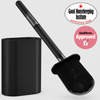
Most bathroom upgrades get a lot of attention — new taps, fresh tiles, a better mirror. People spend real time and money getting those details right. And then, sitting in the corner next to the toilet, is a black stainless steel toilet push brush that looks like it came free with a rental property. Splayed bristles, a murky holder, and a handle that's developed a mysterious greyish tinge. It's the one thing nobody thought to replace.
It sounds like a small thing, but it genuinely isn't. Your bathroom cleaning tools are used every single week. They sit in full view. And in a room where hygiene actually matters, the black stainless steel toilet push brush you use to clean the most-used fixture in the house deserves more than an afterthought.
Switching to a better toilet brush — one that's well-designed, properly hygienic, and looks like it belongs in the bathroom you've worked to create — is one of those low-effort upgrades that makes a disproportionate difference. Once you've made the switch, you'll wonder why you waited.
What Makes a Black Stainless Steel Toilet Push Brush Different From the Rest
Black as a bathroom finish has had a serious moment over the past few years, and for good reason. It pairs well with almost everything — white porcelain, grey stone, warm wood tones, chrome, and brushed metals. It reads as modern without being cold, and it holds its look far better than chrome or silver finishes that show every water spot and fingerprint.
But finish is only part of the story. The stainless steel underneath matters just as much. Lower-grade metals corrode in bathroom conditions — the humidity, the proximity to cleaning products, the occasional splash. 304-grade stainless steel, which is what a well-made brush of this type uses, doesn't have that problem. It's the same specification used in professional kitchen equipment and medical environments because of how reliably it resists rust and degradation over time. The matte black coating on top is durable rather than decorative — it's built to stay looking good through daily use, not just in product photos.
Then there's the brush head itself. This is where traditional toilet brushes fundamentally fall short. Nylon bristles absorb moisture and trap bacteria between uses. That damp, slightly unpleasant smell that develops around an old toilet brush? That's what you're dealing with. Silicone changes that entirely. It's non-porous, so it doesn't retain moisture or harbour bacteria the way nylon does. Rinse it after use and it's actually clean — not just visually rinsed, but genuinely hygienic.
The Push Mechanism: Why It Actually Matters
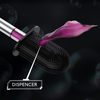
The defining feature of this style of brush is the soap-dispensing mechanism built into the handle. The reservoir holds 40ml of cleaning solution — roughly enough for ten cleans. When you're ready to clean, a single push releases a measured amount of liquid directly onto both sides of the brush head.
It sounds simple, and it is. But it eliminates a step that most people don't realise they find annoying until it's gone. No reaching for a separate bottle of cleaner, no trying to squirt liquid into the bowl at the right angle, no over-dosing and wasting product. Everything is contained in one tool, and the process becomes noticeably faster and cleaner.
There's also a practical advantage in terms of effectiveness. When cleaner is applied directly to the brush head rather than squirted into the bowl water, it stays in concentrated contact with the surface you're scrubbing. That means you're getting more cleaning action from less product — which adds up over time.
The one thing to bear in mind: the dispenser works with liquid toilet cleaners, not bleach. Bleach can affect the mechanism's performance, so it's worth using something like DUCK Toilet Cleaner or a similar liquid product. Within that, the system works consistently well.
Short and Long Bristles — Why Both Matter
The silicone head on this style of brush uses two bristle lengths, and it's not just a design choice for its own sake. The longer bristles are positioned to reach up under the rim of the toilet bowl — that curved overhang that's notoriously hard to clean and easy to neglect because you can't easily see what's up there. Bacteria, limescale, and residue build up in that area faster than most people realise, and standard brushes with uniform bristle length often fail to make proper contact with it.
The shorter bristles handle the main bowl surface and the waterline, where the most visible buildup tends to occur. Together, the two lengths cover the full interior of the bowl more thoroughly than a single-length brush ever can.
The head itself is also flat and flexible, which means it conforms slightly to the curved surfaces of the bowl as you scrub rather than sitting rigidly against them. More contact area, more consistent cleaning, less effort required to get the same result.
Installation Without the Drama
Toilet brush holders generally present one of two frustrating options: drill into your bathroom wall and commit to a permanent fixture, or use a suction cup that works for about three weeks before dropping everything onto the floor.
This brush offers a third approach. It comes with strong adhesive wall-mount stickers that fix securely to the wall without requiring any drilling. The adhesive used is genuinely strong — not the kind that fails under a bit of humidity. It holds the brush firmly, handles day-to-day use without shifting, and if you ever need to remove it, it comes away without damaging the wall surface or leaving residue.
For anyone renting their home, this is particularly useful. You get the cleaner, more organised look of a wall-mounted brush holder without risking your deposit or negotiating with a landlord. And if you'd rather have it freestanding on the floor, that works equally well — the base is weighted and stable, so it stays put rather than tipping whenever you pull the brush out.
Replacing the Head, Not the Whole Brush
One practical detail worth knowing before you buy: the silicone brush head is designed to be replaced independently of the rest of the unit. When the head eventually wears out — and silicone takes considerably longer to degrade than nylon bristles — you unscrew it, attach a new one, and the brush is effectively as good as new.
This matters for a couple of reasons. Practically, it's more economical. Replacement heads cost a fraction of a complete brush, so the ongoing cost of maintaining this tool is low. And from a waste perspective, you're not discarding a perfectly good stainless steel body just because the brush head has seen better days. The part that needs replacing gets replaced; everything else stays put.
It's also just less hassle. No need to reconfigure your wall mount or break in a new freestanding base. You swap the head, and you're done.
A Routine That Actually Works
Cleaning the toilet is nobody's favourite job. But the tools you use have a real effect on how much effort it takes and how good the result is. A brush that dispenses its own cleaner, reaches the parts of the bowl that matter, and rinses clean between uses removes most of the friction from the process. You use it more readily, more regularly, and your bathroom stays in noticeably better condition as a result.
That's the practical upside. The visual one is simpler: a brush that looks good in your bathroom stops being something you want to hide and starts being something that just quietly belongs there.
The black stainless steel toilet push brush is one of the cleaner examples of that combination — function and finish working together rather than one being compromised for the other. It's the kind of product that Moostar has built its reputation on: everyday items that are genuinely better designed, made to last, and worth having in your home.